A day trip to Nîmes: Roman grandeur, gardens and bulls
Nîmes is one of the easiest and most rewarding day trips from Avignon: a short train ride to a city that holds the best-preserved Roman temple anywhere on earth, and an amphitheatre so intact it still fills with twenty thousand people. The Romans called it Nemausus. The French call it the Rome of France. Either way, it is quite breathtaking.
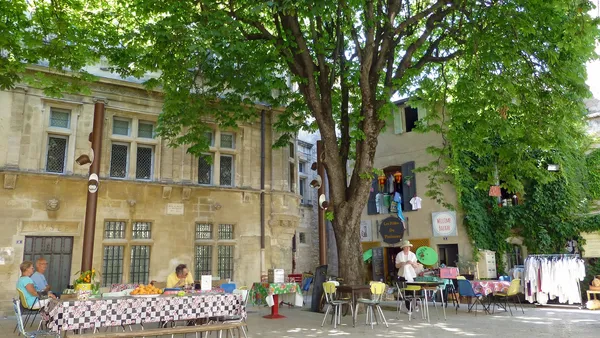
But here is the thing I want you to understand before you go, because it shapes the whole day: Nîmes is not a museum. It is a busy, working city, considerably larger than Arles, and far less cobblestone-pretty. This is a modern place with extraordinary historical elements scattered right through it - Roman monuments standing on ordinary commercial streets, a Roman tower above a public park where families walk their dogs. Some visitors find this jarring. I think it is the point.
A quick note on geography
Nîmes sits in the Gard, which is in Occitanie - so technically you leave Provence when you go. Culturally, historically and in every way that matters to a visitor, it belongs to the same Roman south. Nobody in Nîmes will mind if you call it Provence, but a pedant might.
Getting there from Avignon
Simple. Trains run frequently from Avignon Centre to Nîmes, taking around twenty to thirty minutes. From Nîmes station it is a straightforward walk into the centre - the Arènes are about ten minutes on foot, and everything else radiates out from there. No car needed, no parking stress. (See our guide to Provence without a car for the full picture.)
The Roman headline acts
Three Roman monuments anchor any visit, and there is a combined ticket covering all three that is excellent value - buy it at the first one you visit.
Les Arènes de Nîmes
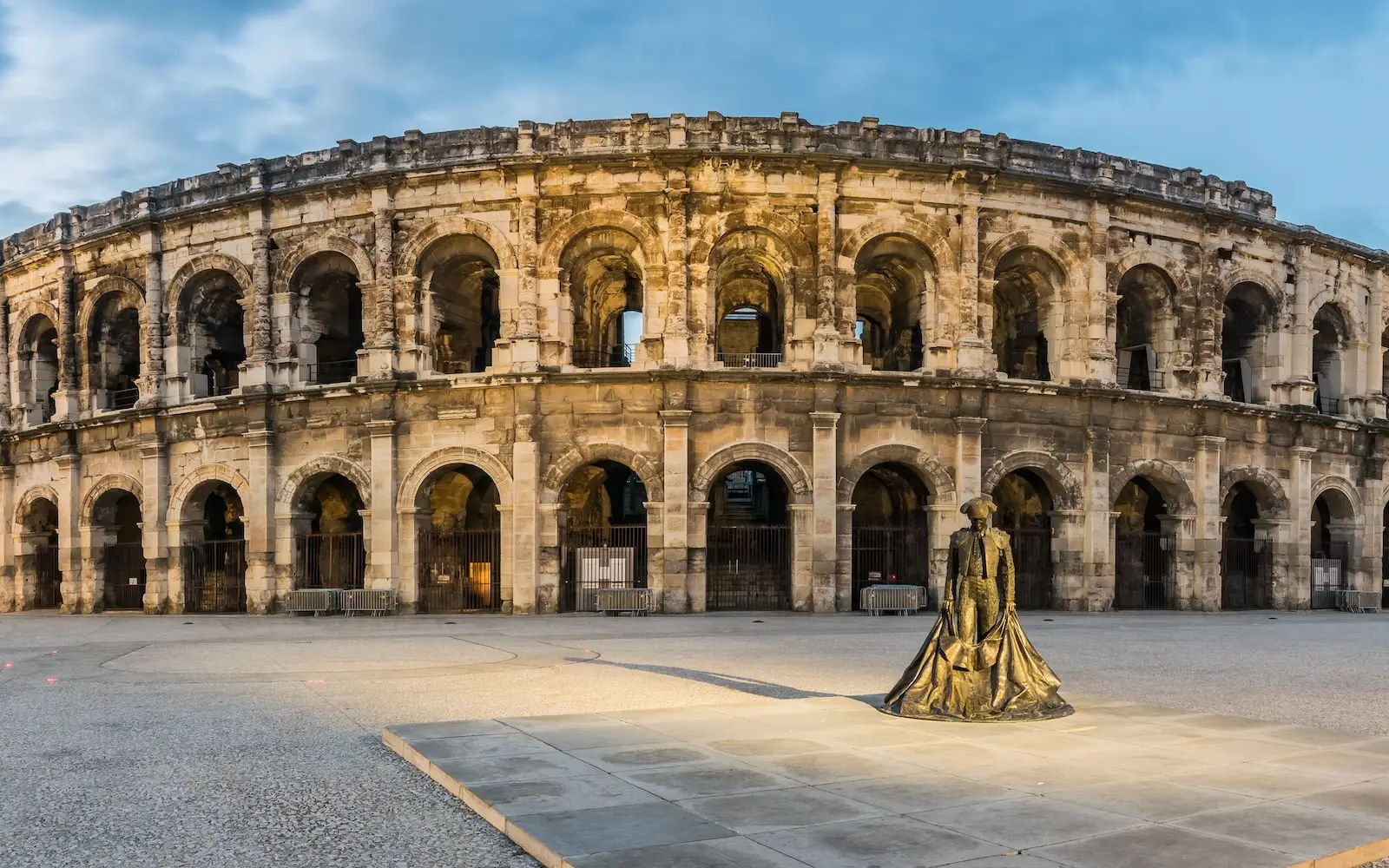
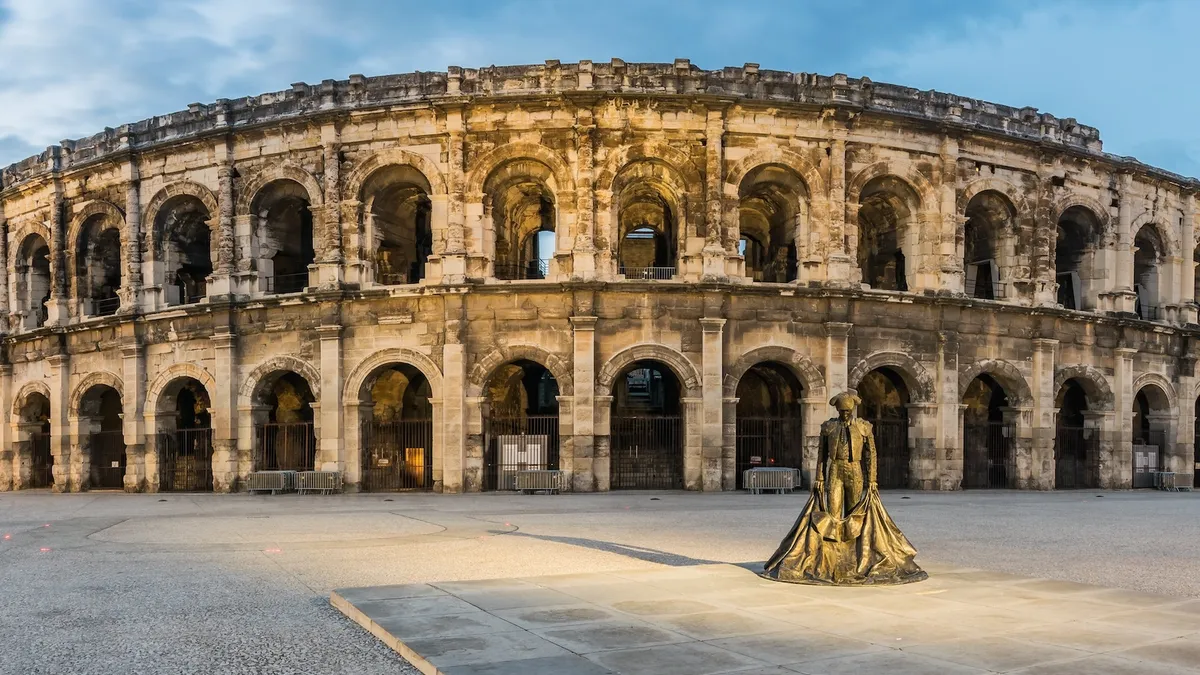
The amphitheatre is the centrepiece, and it is one of the best-preserved in the entire Roman world - better preserved than the arena at Arles, and arguably more impressive than anything comparable in Italy. Two tiers of arches, sixty on each level, still standing as they were built around AD 100. Inside, you can climb the tiers and stand where twenty-odd thousand Romans once sat. The audio guide is genuinely good. It is still a working venue today, hosting concerts, events and bullfights - which we will come to.
The Maison Carrée
A near-complete Roman temple, standing in the middle of a modern square as though it simply declined to fall down. It is roughly two thousand years old and UNESCO-listed since 2023. The proportions are perfect; it inspired Thomas Jefferson, and through him a good deal of American civic architecture. Inside there is a short film on the history of the city - pleasant enough, though the building itself is the reason you are there. Stand across the square and just look at it for a while.
The Tour Magne
The Roman tower on the hill above the gardens, the surviving fragment of the city’s ancient ramparts. Climb the internal staircase and you get the best panorama in Nîmes: the city below, the Roman monuments picked out among the rooftops, and the garrigue hills beyond. Worth the legs.
The Jardins de la Fontaine - my favourite part
Here is what I would tell a friend, and what most guides undersell. The Jardins de la Fontaine are genuinely great, and they are free.
They begin as a formal 18th-century garden - one of the first public gardens in Europe - all balustrades, stone urns and still water around the ancient spring that gave the city its name. At the lower level, on a hot day, this is a beautiful respite from the heat, with the soft sawing of the cigales in the trees as a natural soundtrack. There are few better places in the Roman south to sit and do nothing.
Then, as you climb the hill, something lovely happens: the manicured garden gradually gives way to raw Mediterranean landscape - pines, scrub, dust, garrigue. The transition is gradual and completely unforced, and by the time you reach the Tour Magne at the top you are standing in wild hillside looking down over a Roman city. The view from up there is splendid. Take the time to walk all the way up.
Tucked into the lower gardens you will also find the Temple de Diane, a ruined Roman structure whose original purpose nobody has ever satisfactorily explained. It is atmospheric and free to wander into.
Bulls, ferias, and the argument you should know about
Now the part that a lot of travel writing quietly skips, and shouldn’t. Bull culture is woven into the fabric of Nîmes, and you cannot understand the city’s calendar or its character without it.
Twice a year the city throws a feria and turns into something extraordinary. The Féria de Pentecôte in late May is the biggest in France - over a million visitors in a city of 150,000, with brass bands (the peñas) roaming the streets, pop-up bars called bodegas open until three in the morning, paella and sangria everywhere, white Camargue horses, and bulls driven through the streets in an abrivado. The smaller Féria des Vendanges in September celebrates the grape harvest and is calmer and more family-friendly.
At the centre of all this is the bullring - the Roman arena, repurposed. And here an important distinction that visitors often miss:
- The corrida is the Spanish-style bullfight, and the bull is killed. Three stages, roughly twenty minutes, ending with the matador’s sword.
- The course camarguaise is the local Provençal tradition, and the bull is not killed and no blood is spilled. Athletes in white called raseteurs try to snatch a rosette from between the horns of a black Camargue bull within a time limit. The bull is the star: they are named, they have careers, they are celebrated for years.
I should be straightforward with you here. I have never been to a corrida and it is not my thing. It is also genuinely controversial - polls consistently show around three quarters of the French public favour banning it, and there have been repeated parliamentary attempts to do so. It remains legal only in southern regions with an unbroken local tradition, of which Nîmes is one. You will find passionate defenders of it as cultural heritage and equally passionate opponents, sometimes protesting outside the arena on the same day.
I am not going to tell you what to think about it. What I will say is that pretending it is not part of Nîmes would be dishonest, and that if you want the feria atmosphere without the killing, you can have it - the street party is the larger part of the experience and runs entirely independently of the arena, and the course camarguaise is an option if you want to see bulls without a death.
If you would rather avoid the whole thing, simply do not visit during feria week. The city is transformed and accommodation is impossible.
Beyond the monuments
The Musée de la Romanité, opposite the arena, opened in 2018 and is architecturally striking. I have not been myself, so I will not oversell it - but it holds the city’s Roman collection and comes well reviewed by people whose judgement I trust.
The Carré d’Art is Norman Foster’s glass building facing the Maison Carrée across the square - a deliberate modern answer to the ancient temple, holding the contemporary art museum and the city library. Whether the dialogue works is a matter of taste, but the roof terrace café has a fine view of the temple.
Les Halles de Nîmes, the covered market, is where I would send you for lunch. Proper local produce, brandade de morue (the local salt cod speciality), and a far better feed than the tourist terraces near the arena.
And a small thing that delights people: denim is named after Nîmes. Serge de Nîmes - the sturdy twill cloth woven here - became “denim”. The jeans you are wearing carry the city’s name.
Nîmes or Arles?
People ask me this a lot, since both are quick train rides from Avignon and both are Roman.
Arles is smaller, prettier, more charming and more walkable, with Van Gogh’s ghost on every corner and one of the best markets in Provence. It has more soul in the cobblestones.
Nîmes is grander. The monuments are bigger and better preserved, the arena more complete, the temple genuinely world-class. It is a real city rather than a beautiful town, so the streets between the sights are ordinary in a way Arles’s are not.
If you can only do one and you want charm, go to Arles. If you want the most impressive Roman architecture in France, go to Nîmes. If you have two days, do both - they complement each other perfectly. Our Roman Provence guide sets both in the wider context.
How long to spend, and when
A full day is right. The three Roman monuments, a proper walk up through the Jardins de la Fontaine to the Tour Magne, lunch at Les Halles, and a wander through the old town fills a day comfortably without rushing.
Go in spring or autumn if you can - Nîmes gets seriously hot in July and August, and the monuments offer little shade. A Saturday gives you the markets at their best. And check the feria dates before you book: go deliberately for one, or deliberately avoid them.
The bottom line
Nîmes gives you the finest Roman architecture in France, a garden that climbs from formal elegance into wild hillside, and a living bull culture that is impossible to ignore and worth understanding. It is not a postcard town, and it is not trying to be. Provence and its neighbours cannot only be about the past - embracing the current context and the vibe matters just as much, and Nîmes offers a genuinely interesting combination of both.
For how it fits alongside everything else, see our guide to the best day trips from Avignon.
Planning your days around Avignon and want a local’s honest steer on what to prioritise? We are always happy to help with free, practical advice - just get in touch.