A day trip to Saint-Rémy-de-Provence: chic streets, Roman ruins and Van Gogh's asylum
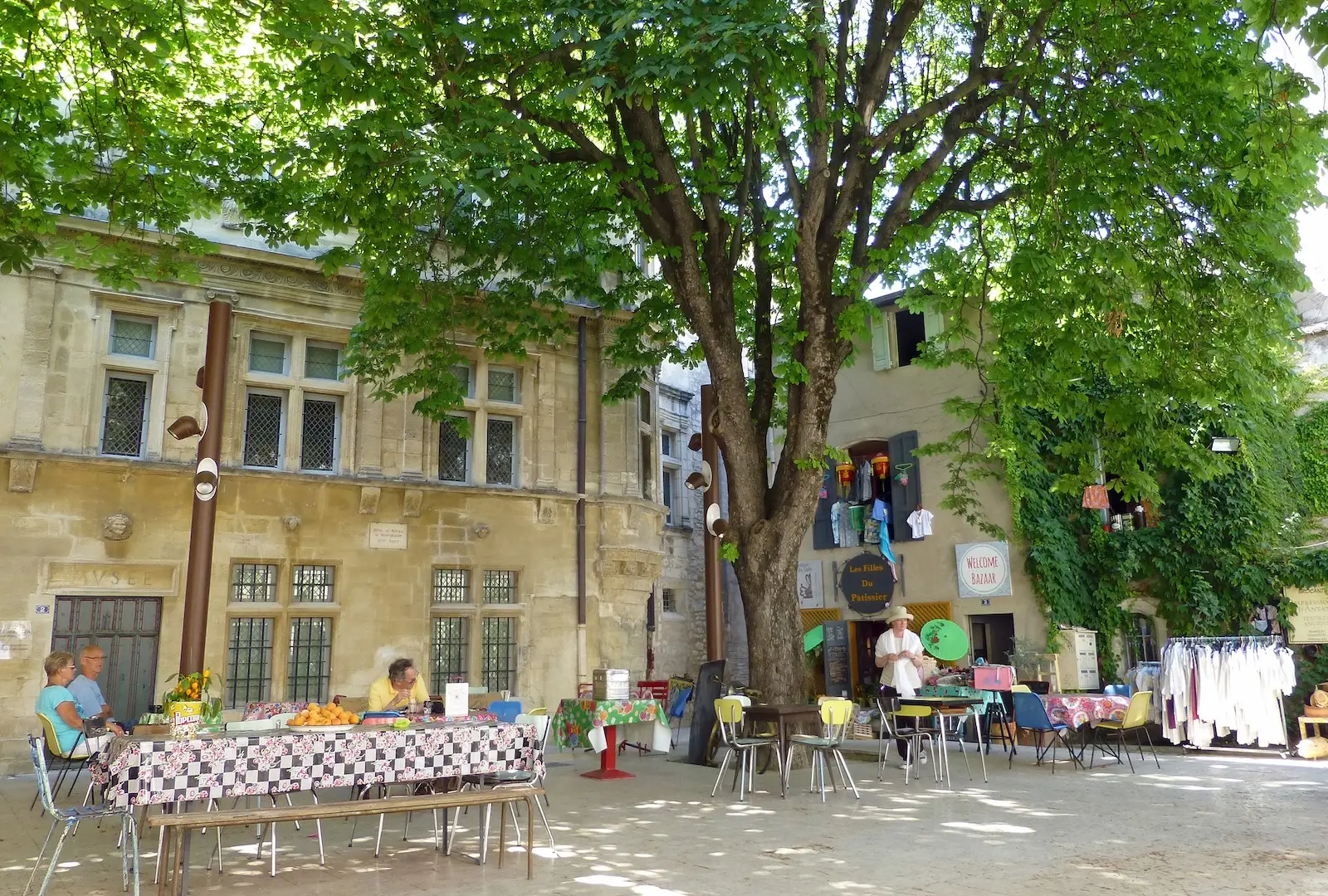
Let me be straight with you: Saint-Rémy-de-Provence is touristy, and it is pricey. It is also one of the prettiest towns in Provence, and I cannot pretend otherwise. The centre has been renovated with real taste - the honey-stone façades, the shuttered windows, the cobbled lanes all read as one coherent, beautiful whole. It is chic. It is the place to be seen in summer. You might even bump into a French celebrity. And if you have the time, it is absolutely worth a day - or more honestly, a half day - of your trip.
Here is how to do it from Avignon, with no illusions and no wasted time.
Getting there: the bus, not the train
Unlike Arles and Nîmes, there is no train to Saint-Rémy. This is the first thing that catches people out.
The practical option is the Zou! line 707 bus, which leaves from Avignon’s Gare Routière (the bus station right next to the central train station). The journey takes about 45-50 minutes; budget roughly €4-6 for the fare, and check the current timetable and tariff before travelling. It drops you in the town centre, and from there the main sights are reachable on foot.
Check whether your chosen service continues to the Glanum stop at the southern edge of town. Otherwise it is a pleasant 20-minute walk along Avenue Vincent Van Gogh from the centre to Glanum - which is, incidentally, part of the charm. Check the return bus before setting out, particularly on Sundays and outside summer.
If you are driving, it is about 30 minutes from Avignon via the D571. But the bus works for visiting Saint-Rémy itself. Save the car for combining it with somewhere harder to reach (more on that below).
For the full car-free picture across Provence, see our guide to Provence without a car.
The town: almost too pretty
Saint-Rémy’s old centre is compact, with a ring of tree-lined boulevards around its perimeter. Inside is a maze of narrow lanes, plane-tree squares and fountains. It is a place to wander rather than march through with a checklist.
What makes Saint-Rémy distinctive is the homogeneity of it all. Many Provençal towns are a patchwork of centuries and styles. Saint-Rémy has been renovated cohesively - the colours, the stonework, the shutters all read as one unified vision. It gives the place a polished, almost stage-set quality that some visitors find too perfect. I understand the critique. But I also think the execution is genuinely beautiful, and the “too pretty to be true” feeling fades when you sit on a terrace with a coffee and realise the shade is real, the plane trees are real, and the Provençal atmosphere is not manufactured - it is just well looked after.
What to wander past
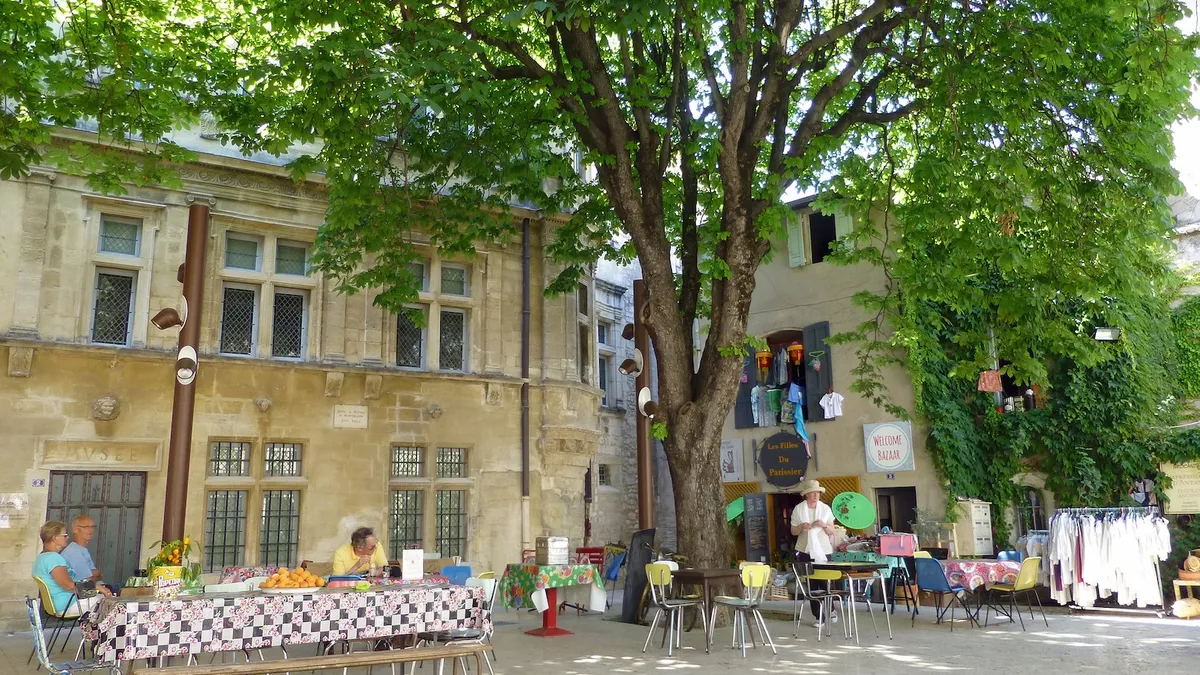
- Place Favier is a lovely starting point: old stone buildings, shade and café terraces.
- Rue Carnot is one of the main streets through the centre; leave it occasionally to explore the quieter lanes and squares.
- Nostradamus was born here in 1503. There is a plaque at 6 rue Hoche and a fountain dedicated to him nearby. It is a footnote, not a destination - but a nice footnote.
- The boutiques are part of the experience. Art galleries, Provençal fabrics, pottery and gourmet food stores: this is designer Provence, and window-shopping is half the fun.
Glanum: Roman ruins at the town’s doorstep
A 20-minute walk south of the centre along Avenue Vincent Van Gogh brings you to Glanum - the excavated remains of an ancient town at the foot of the Alpilles. It grew around a sacred spring and preserves successive layers of local, Greek-influenced and Roman life. You can trace streets, baths, houses and public buildings through the ruins, with the hills rising behind them.
Allow 1.5-2 hours for the archaeological site. Admission is paid, with concessions and free-entry categories; check current prices and seasonal opening hours before visiting. If you want more context, the Hôtel de Sade in town displays finds from the site, but its opening season is more limited.
Just before the paid entrance, you pass Les Antiques - a Roman triumphal arch and mausoleum that are free to view and need no ticket. They are the iconic symbol of Saint-Rémy, and the relief sculpture on the mausoleum is remarkably well preserved. Do not rush past them.
For photographers: morning light is softer and quieter - you may even beat the clouds. Late afternoon gives warm, raking light across the stone. Both work; pick based on your schedule. For the full Roman Provence picture - Arles, Nîmes, Orange and the Pont du Gard - see our dedicated guide to Roman Provence.
Saint-Paul-de-Mausole: where Van Gogh painted The Starry Night
Near Glanum sits the monastery of Saint-Paul-de-Mausole. This is where Vincent van Gogh voluntarily admitted himself in May 1889, after the crisis in Arles, and stayed for about a year. During that period he painted The Starry Night, Irises, and many of his olive-tree and cypress paintings.
The psychiatric institution remains active, so the visit covers only the areas open to the public. These include a reconstruction of Van Gogh’s bedroom, the Romanesque cloister and the gardens. It is an intimate place rather than a grand museum: the interest lies in the setting where he lived and worked.
Allow about 45 minutes. Entry is paid; check seasonal opening hours and current admission prices before going.
The town has also laid out a free Van Gogh walk, with interpretive panels reproducing his paintings along the route towards Saint-Paul. It is a lovely way to connect the town and the sites on foot.
The Wednesday market
If you can swing it, go on a Wednesday morning. The Saint-Rémy market fills the squares and boulevards with produce, olives, tapenades, cheeses, textiles, soaps and other Provençal goods.
Wednesday is also one of the busiest times to visit. Arrive before 10am if you want to browse without elbowing. Pair the market with a walk to Glanum later and you have the makings of a very good day.
Where to eat
I do not have a personally tested restaurant shortlist for Saint-Rémy, so I will not pretend otherwise. This is a chic town, and restaurant prices can reflect that: check the menu before settling onto the most inviting terrace.
A relaxed lunch is part of the pleasure here, but a picnic is a good alternative if you would rather spend your time and budget on the sights. On Wednesday, the market is an obvious place to assemble one.
Local products to look for include Vallée des Baux-de-Provence olive oil, tapenade, goat cheese and honey from the Alpilles.
Combining with Les Baux-de-Provence
Here is where a car becomes genuinely useful. Les Baux-de-Provence - the spectacular hilltop village in the Alpilles, with the Carrières de Lumières nearby - is only about 10 km and 20 minutes from Saint-Rémy by road. They make a natural pair: Saint-Rémy in the morning, then up to Les Baux for the afternoon.
For this combined trip, plan on a car or private transport. Do not assume that a bus connection will fit your itinerary; any seasonal service needs checking for your travel dates.
We will have a full guide to Les Baux-de-Provence soon - for now, know that if you have wheels, the two fit very nicely into a day trip from Avignon.
How long to spend
A half day is enough for the town centre plus either Glanum or Saint-Paul-de-Mausole. A full day lets you do all three at a relaxed pace, with lunch and a market wander. If you are combining with Les Baux, budget the full day and take the car. Trying to fit every Saint-Rémy sight into the morning before Les Baux would turn a pleasant outing into a checklist.
Is it worth your time?
Saint-Rémy is not Arles. It is not a must-do. It is touristy, it is pricey, and it knows it. But it is also genuinely charming, beautifully kept, and packs three distinct layers - a chic old town, Roman ruins and Van Gogh’s asylum - into one manageable trip from Avignon. If you have the time, go. If you are choosing between Saint-Rémy and Arles and you only have one day, take Arles. But if you have two days? Take both.
For how this fits into the bigger picture, see our guide to the best day trips from Avignon.
Planning your days around Avignon and want a local’s honest steer on what to prioritise? We are always happy to help with free, practical advice - just get in touch.